This year we celebrate the Diamond jubilee of Sr Elizabeth Slattery, marking sixty years of dedicated service as a Religious Sister of Charity. In a special feature, Elizabeth reflects on her life and ministries
When did you first consider a religious vocation?
It was in my early teens when I first began to consider religious life. Before that, I always imagined I’d marry and have children, I hoped I would have two girls and two boys. I attended boarding school with the Sisters of Mercy, but around the age of 13 or 14 I began to think seriously about a religious vocation. When I later moved to a school run by the Sisters of Charity, something resonated with me. I found them very humane, and I liked their commitment to working with the poor. That appealed to me deeply, and I thought, this is the life I’d like to give myself to.
My parents weren’t too pleased, particularly my mother, although they were religious they were not too keen on me becoming a nun. They encouraged me to reconsider, and I even attended an interview for nursing, and I think they hoped that would change my mind. But I felt strongly that if I didn’t enter then, I never would. After much thought I entered the congregation in October 1965 at the age of seventeen.
How did that lead to you becoming a Religious Sister of Charity?
I first told my parents in a letter from boarding school. Shortly afterwards, I was called to the parlour where they were waiting. Entering was difficult at first—especially the silence and the adjustment to new routines. The Sisters were very humane, though, and that helped immensely. The rules and regulations were tough, but I persevered.
After two and a half years, I was professed as a Sister of Charity. I went on to study catechetics and English and later completed a degree in history at Mater Dei in Clonliffe. I was satisfied simply to pass the exams, I didn’t want to stand out for any special recognition.
Can you tell us anything about your early ministries/did you spend time overseas?
My first mission was in Sligo, teaching in a co-educational school near the Moy River. I loved it. There were ten Sisters in the house at the time, most elderly. One, Sr Mel—whom we affectionately called Granny Mel, was a real saint. She looked after us, always asking how we were getting on.
After six years I was missioned to Baldoyle (1978–1982), where I worked with a wonderful headmistress, Sr Patricia, in a large all-girls school. I then spent several years in Kings Inns Street in Dublin. Though it was a change moving to the city centre, I discovered that young people are much the same everywhere. I enjoyed the bustle of city life, walking each day to school from our house in Mountjoy Street.
I remember wishing I had a TV in my room for the whole time I was in Mountjoy Street and then when the Mountjoy Street community closed. On the last night, myself and Sr Rosemary were the only two left and they had removed all the beds and things, and we had mattresses to sleep on in the communal room and wasn’t there a TV in the room—but I was too tired to watch it!
In 1990 I returned to Baldoyle, this time as principal. I felt nervous about it as I didn’t feel like I would be the best person to be in charge. There were no Boards of Management then, but thankfully everything went well. Our deputy principal, Frank Kelly, was exceptional. I remained there for sixteen years, and although I had never wanted to be in charge, it worked out. Eventually, feeling the school needed a change, I asked to study psychotherapy, something that had always interested me. I completed a four-year degree with Middlesex University.
Since then, I have been working in Seville Place, beside St Laurence O’Toole Church. I love the work. Once you get to know the clients, you grow very fond of them and deeply interested in their lives. I now live in Donnybrook and continue my ministry in psychotherapy.
Are there any moments of spiritual fulfilment or personal growth that stand out to you?
One significant moment was realising that I had managed to be principal for sixteen years, something I’d never imagined myself capable of! I always preferred not to be in charge, but with God’s help and an excellent staff, it worked out.
Being principal meant taking responsibility not just for education, but for the school building itself. Every summer I’d be organising repairs: fixing roofs, upgrading alarms, one year we added on a cloakroom. We also hosted French and Italian students during the summer months, which helped fund the upkeep of the school.
Counselling work has also been a source of deep fulfilment. It keeps you learning, reading, and staying up to date with the latest treatments and therapy. I’ve made very good friends in the congregation, and annual retreats have grounded and guided me.
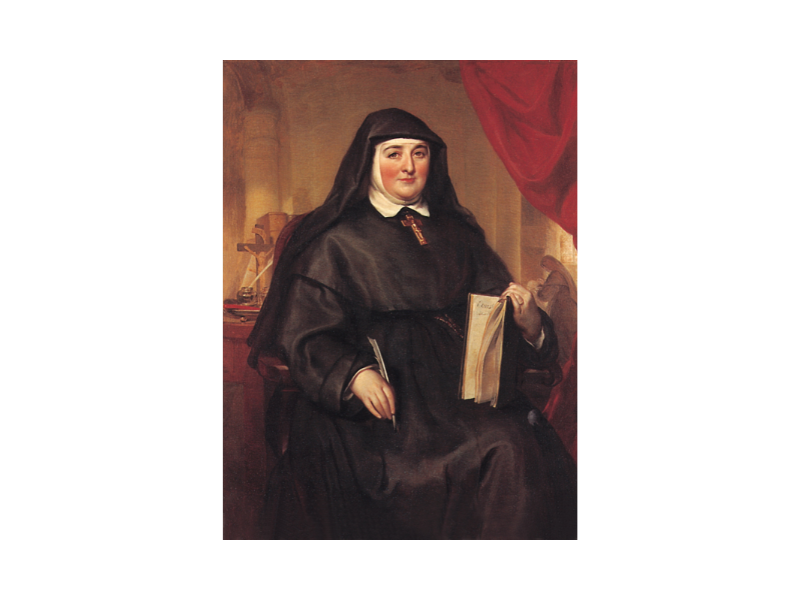
I now live in a bedsit in a large community of ten in Donnybrook and I’m very content there. Courses in psychotherapy and religious life continue to enrich me. Mary Aikenhead founded us to care for the poor to open schools, hospitals, and to visit homes. Much of that work is now done by the government, but the spirit of service remains.
What are you particularly delighted or proud of when you look back on your life in religious?
I’m proud that I stayed, despite the inevitable pressures and challenges. Over time you settle into the life, and the work keeps you grounded. There were times when it was hard to keep going, especially as circumstances changed and we adapted, but I persevered with religious life despite outside pressures, there was always pressures on you.
As you get on you do settle in to the life, and you are very busy with the work and that helps.
What legacy do you hope to leave behind through your work and your life as a Religious Sister of Charity?
Fairness was always very important to me, especially in my years in education. I tried never to favour one student over another. Everyone deserved equal treatment.
I was delighted recently when a former student from my first school, Banada Abbey, invited me to visit. As Sisters, we move around so much that it can be easy to lose touch. Invitations to reunions are wonderful they allow you to reconnect, to see former pupils thriving, many now grandparents themselves. That, in its own way, feels like a legacy.